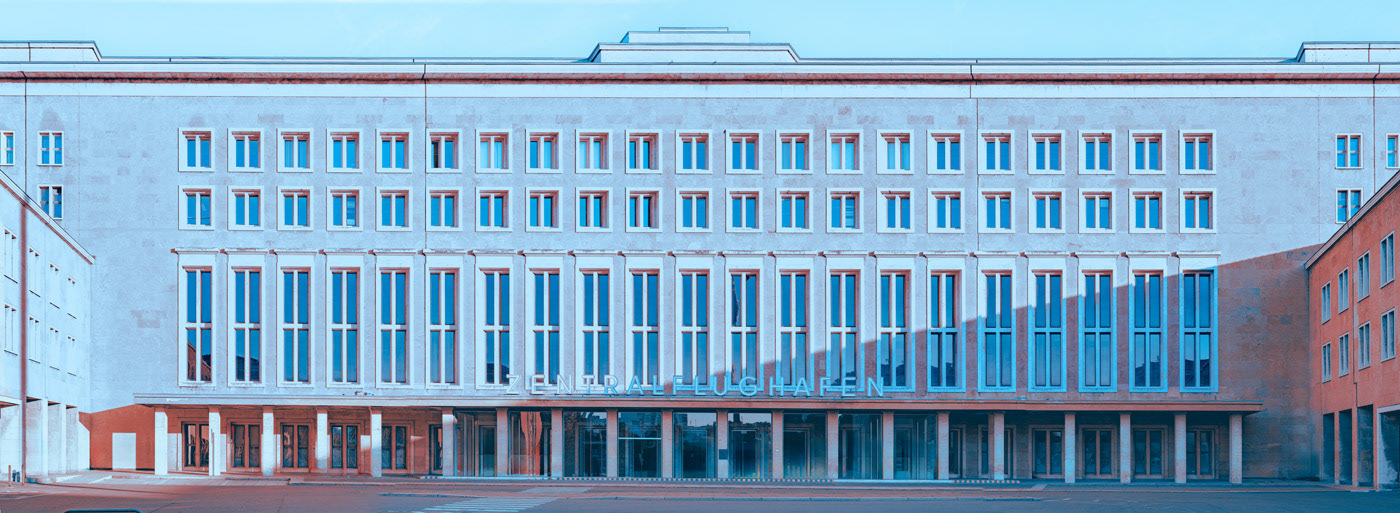
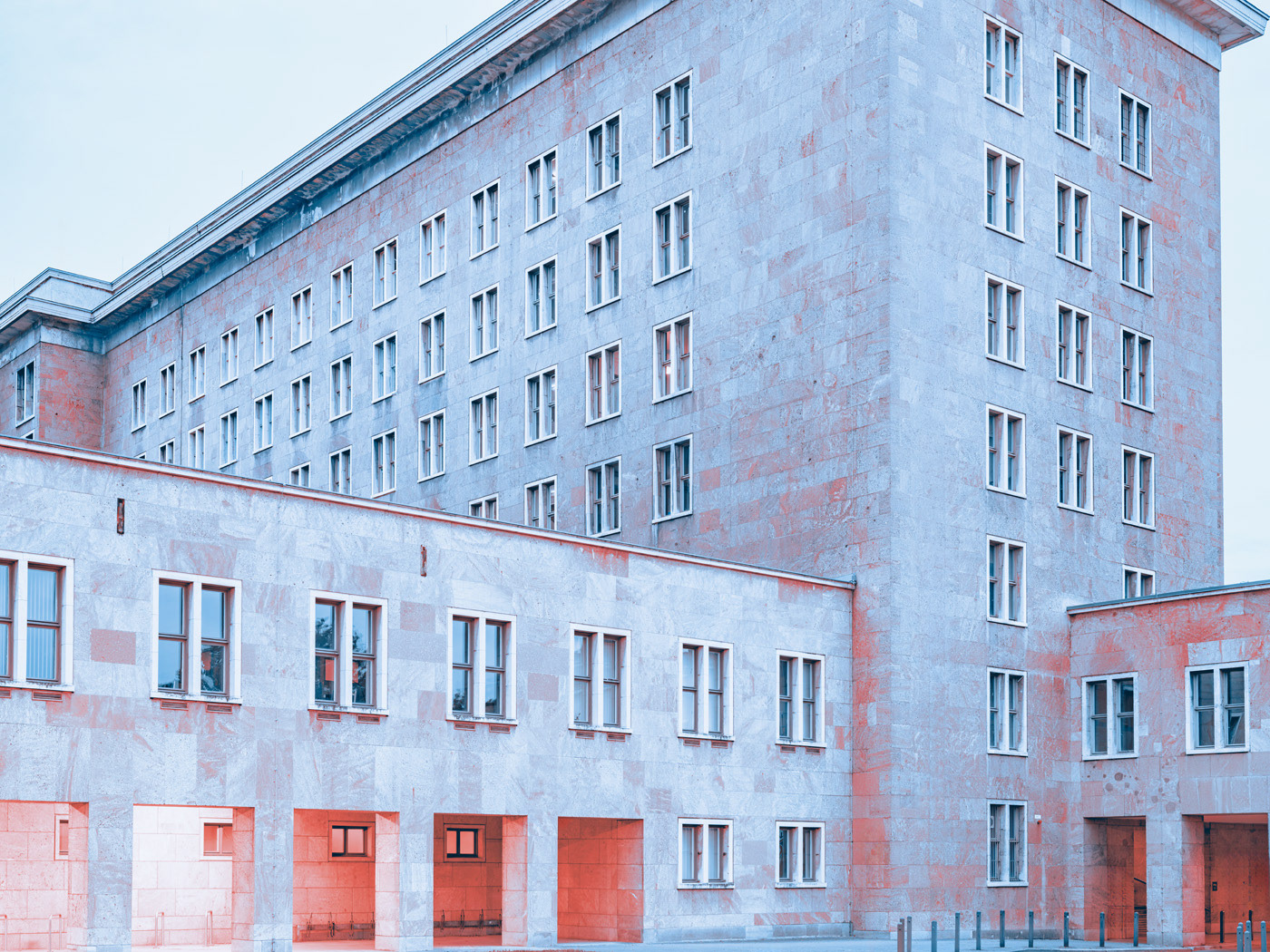
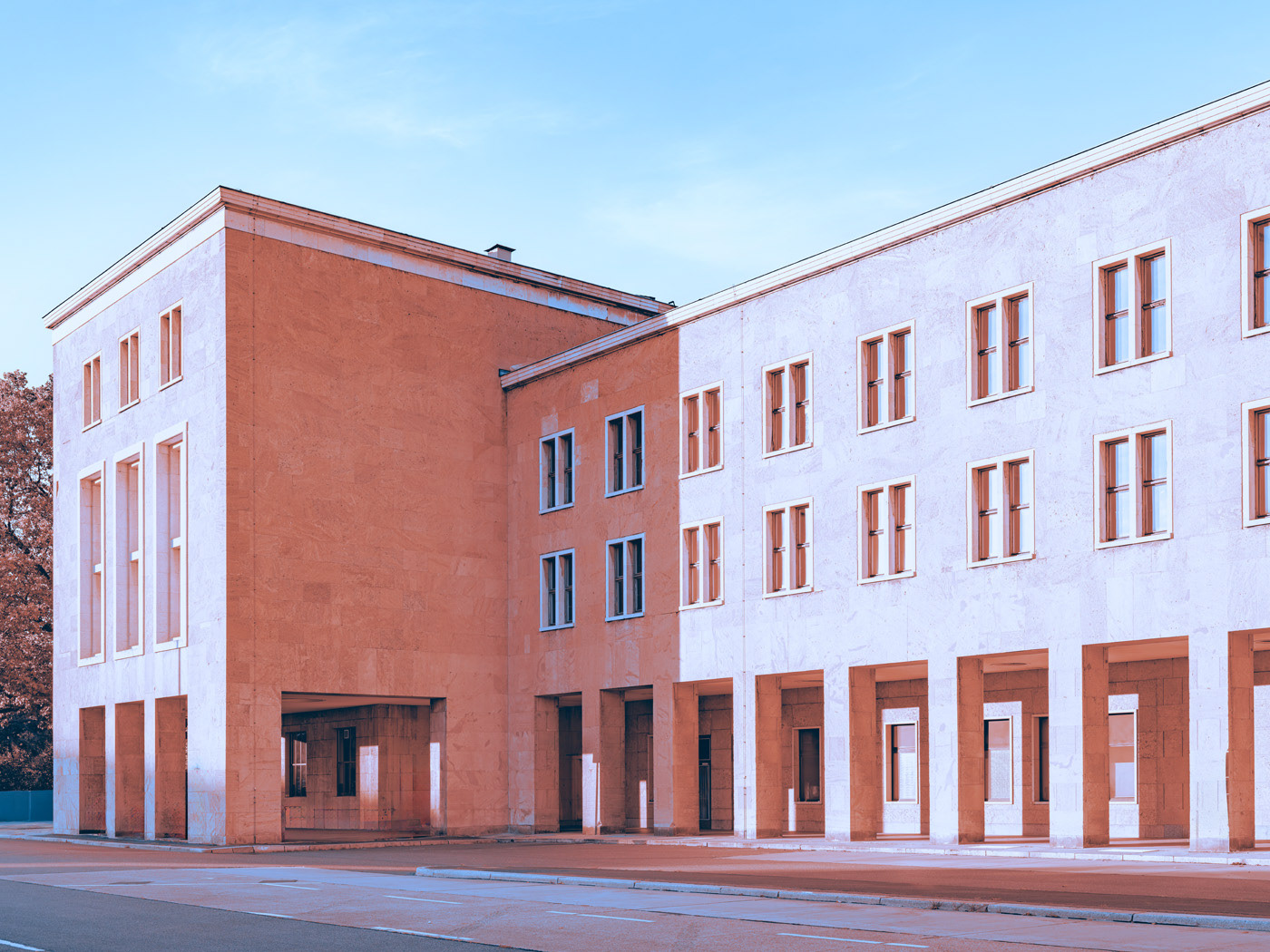
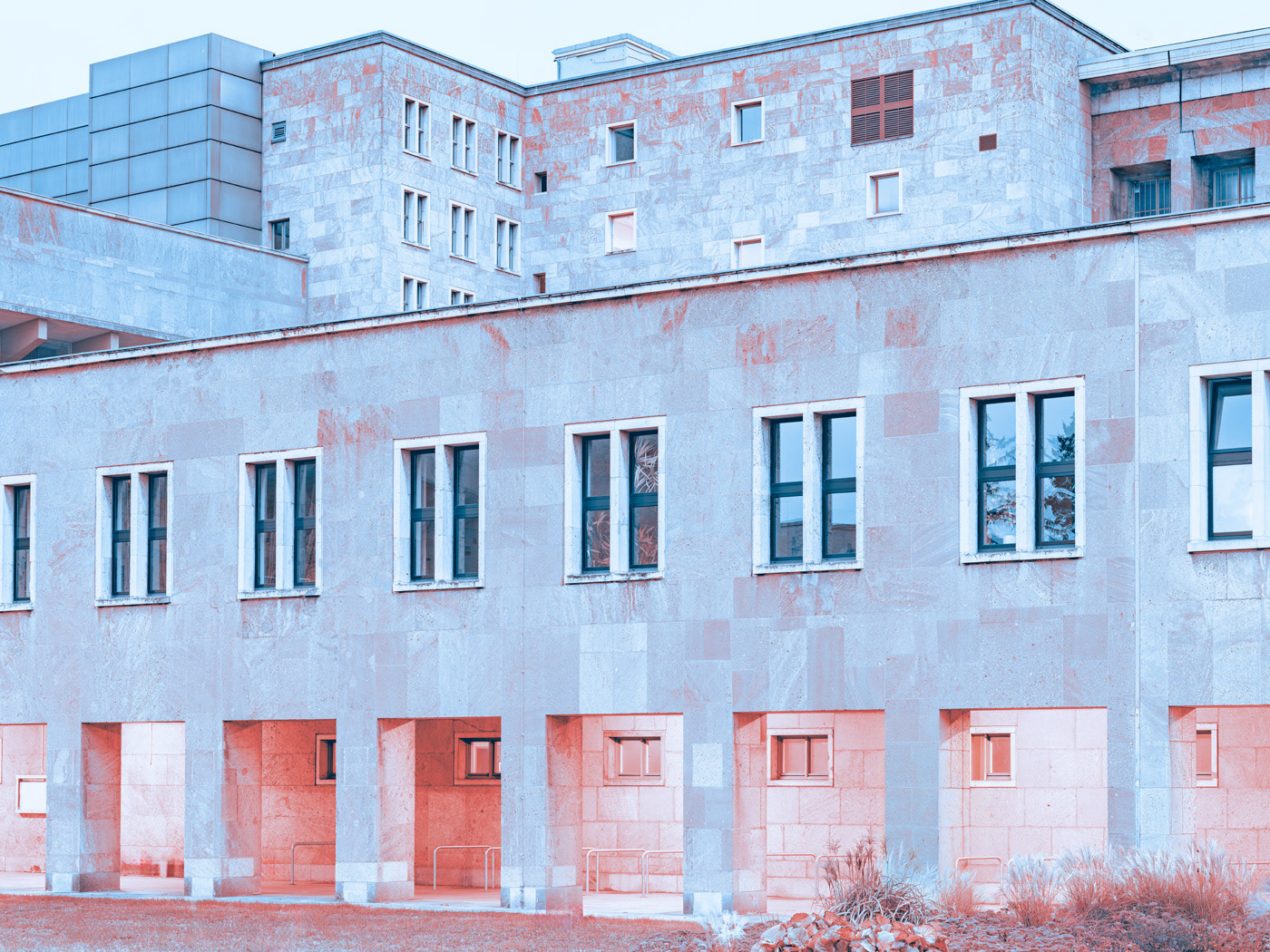
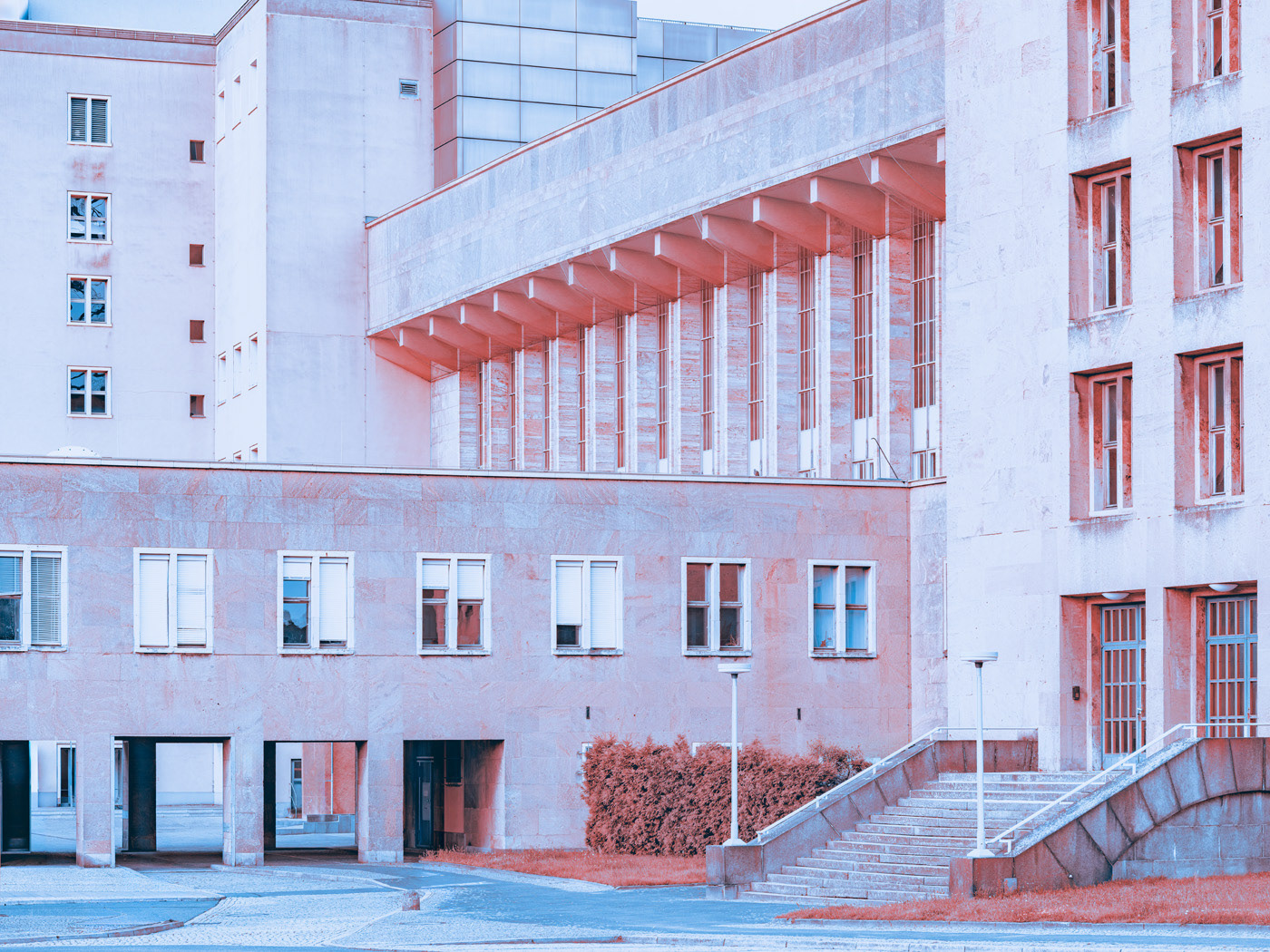
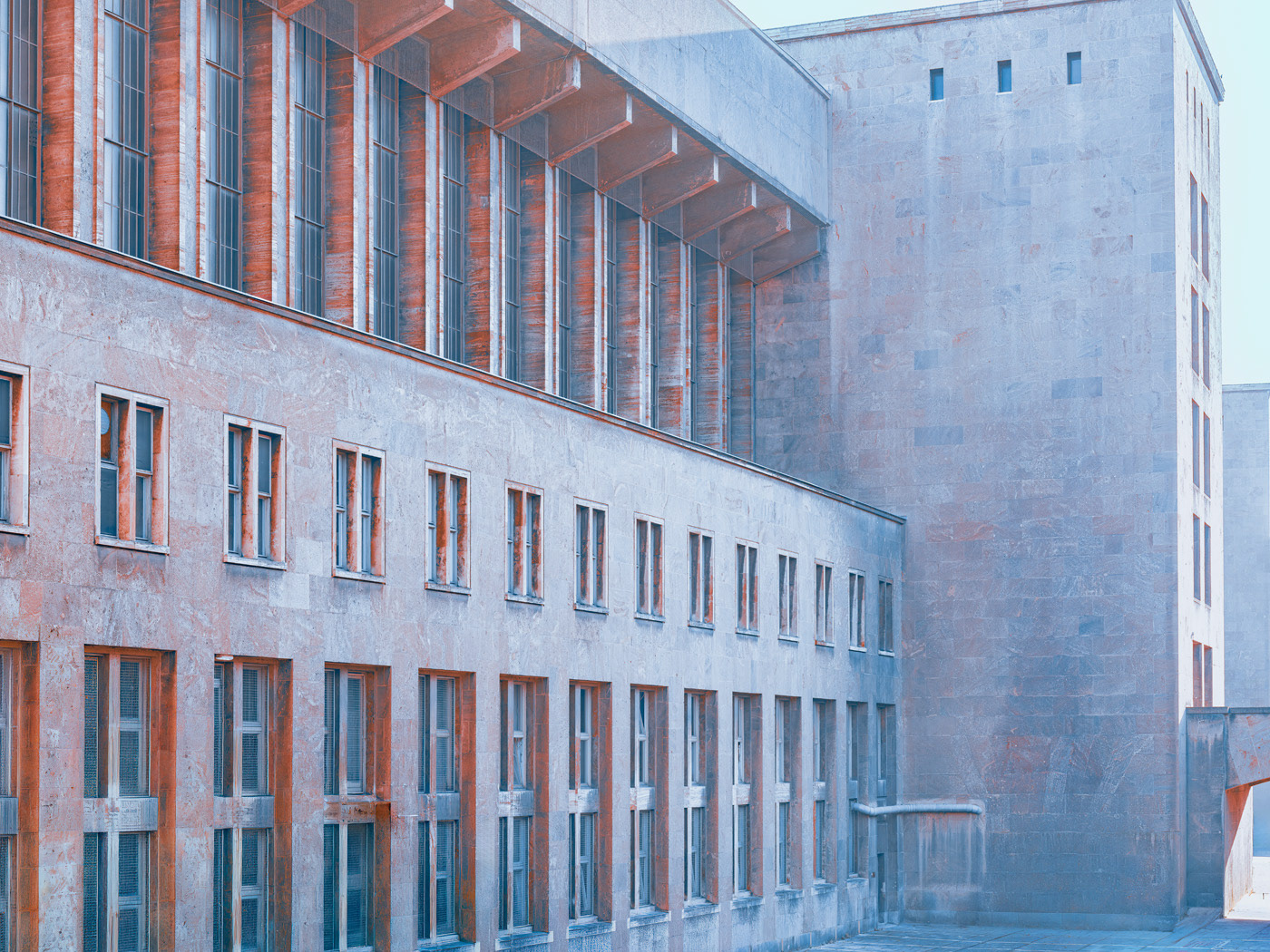
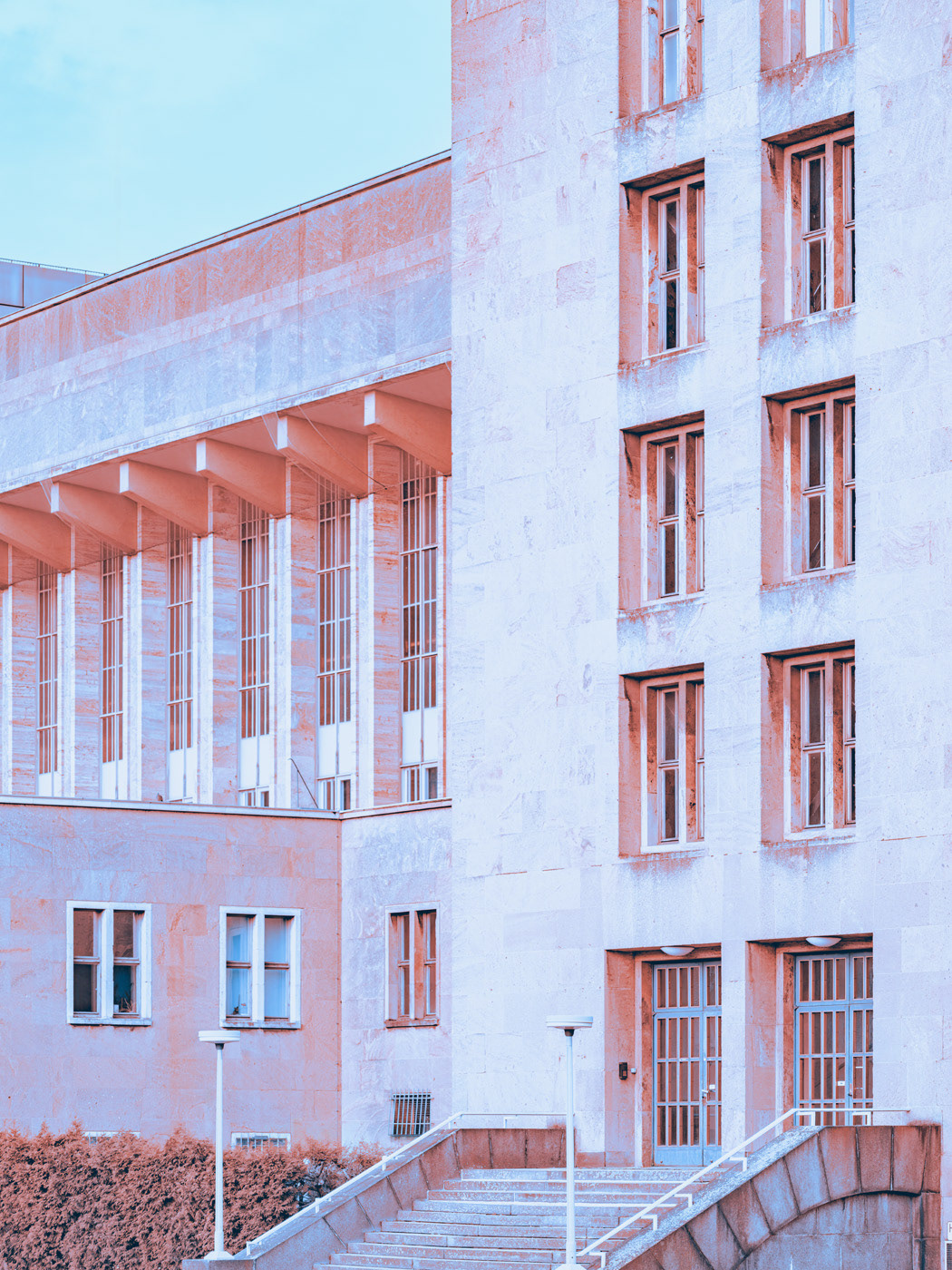
Tempelhof Airport carries within its forms one of the most complex histories of the twentieth century. Built in the 1930s during the National Socialist regime and becoming one of the symbolic sites of the Berlin Airlift in 1948, it has passed through profoundly different functions and meanings.
I seek to tell this story through what remains in its forms, rather than through its events. Surfaces, geometries, repetitions, and monumental volumes become the signs of an architecture suspended in time, apparently motionless, while everything around it has changed.
In this permanence, I find the meaning of Tempelhof: a place that moves through time, transforming its meaning without erasing the memory of what it once was